Showing posts with label History. Show all posts

Tuesday, February 4, 2020

Earthquake + Home, Managua, Nicaragua, 1972


Last month I also put forth an effort to find the location of our home before the earthquake of 1972. The first woman we met made my trip this year after a minute of conversation. It turned out that she had visited my parent's store and also remembered our apartment building. She was so elegant and exuded the past, while bringing everything into the present. We spoke for a while then followed her directions. Upon arriving we met the second woman of our morning. She had lived in our neighborhood since her birth and remembered our building perfectly as well. The thought that both woman had been in my life unknowingly took my breath away, made my year on the first day!

El mes pasado hice un esfuerzo por encontrar la ubicación de nuestra casa antes del terremoto de 1972. La primera mujer que conocimos hizo mi viaje este año después de un minuto de conversación. Resultó que ella había visitado la tienda de mis padres y también recordaba nuestro edificio de apartamentos. Ella era tan elegante y exudaba el pasado, mientras traía todo al presente. Hablamos un rato y luego seguimos sus instrucciones. Al llegar nos encontramos con la segunda mujer de nuestra mañana. Ella había vivido en nuestro bbarrio desde su nacimiento y también recordaba perfectamente nuestro edificio. La idea de que ambas mujeres habían estado en mi vida sin saberlo me dejó sin aliento, ¡hizo mi año el primer día!


Thursday, June 20, 2019

Omar + I, Syrian Camp, Bekaa Valley, Lebanon, 2018


This happened to be the scene after the photography one afternoon, as the community invited me to celebrate a wedding. The leader's daughter married and the groom's family had a full week's worth of feasts to prepare for the camp. I have known this young man for 21 years, and it was an honor to be seated next to the leaders of the community, men who once were boys of my photography. So they refused to let me leave and we dug right in a few hours ago!

Website

Tuesday, November 27, 2018

Young Girl + Forest, Lake Granada, Nicaragua, 2017


Spent a few days in the darkroom this past week, and looking forward to the rest of November in that sweet space printing the work from Nicaragua. Here is a young girl living on the outskirts of Lake Granada, tending land with her mother for another family.


Instagram

Note: Frame exposed with a Hasselblad 503 CW/100 mm lens combination.

Wednesday, September 19, 2018

Yaniuska + Columnas, La Habana, Cuba, 2018


Ella ha cambiado mucho a lo largo de los años, pero su talento expresivo se ha mantenido magnífico. Hemos documentado esta hermosa bailarina durante los últimos cinco años o así, y cada vez que se mueve de una posición a otra con una ferocidad.

Ayer tuve la oportunidad una vez más de fotografiarla, y lo hicimos en la ciudad por primera vez. Se ha convertido en una hermosa joven y me enorgulleció con su disposición a ser fotografiada. Ella vino con su madre, y caminamos por la ciudad buscando lugares.

La ciudad, por supuesto, es un lugar mágico para la luz y las sombras, perfecto para su talento. Usamos la primera hora de luz solar hermosa y tuvimos la suerte de tenerla. Espero ver las imágenes cuando se procesa la película, y volver el próximo año para hacerlo aún mejor para ella y su familia.

--------------------


She has changed much over the years, but her talent at expression has remained magnificent. We have documented this beautiful dancer for the past five or so years, and every time she moves from one position to another with a fiercness.

Yesterday I had the chance once again to photograph her, and we did so in the city for the first time. She has grown into a beautiful young woman, and made me proud with her willingness to be photographed. She came with her mother, and we walked around the city looking for spots.

The city of course is a magical place for light and shadows, perfect for her talent. We used the first hour of beautiful sunlight and were lucky enough to have it. I look forward to seeing the images when the film is processed, and to coming back next year to do even better for her and her family!


Instagram


Note: This image was made with a Fuji XT-2.

Thursday, May 17, 2018

Dancers + Friends, León, Nicaragua, December of 2017


In a very short time the dearest of friends were made in the city of my father's young adulthood. A simple visit to a ballet school in León resulted in us being embraced like family, in the most beautiful group of dancers most willing to create art.

Antonella and Jose two such beautiful people. Without reservation they offered themselves to the camera on several occasions, with the latter also coming along to help us with the younger dancers one afternoon. We had less than a week together yet were able to create memorable images nonetheless.

For some reason this past December the weather was different. Usually Nicaragua is sunny between December and February, However it was cloudy on so many afternoons, including the afternoon when we made this image. Luckily we had some stretches of sunshine, giving us such an exposure.

This year I will be prepared to honor the school, its students and certainly the professor as well. The trust has been placed in me, and in December the effort will be put forth to make the best images possible. 


Note: This image was made with a Hasselblad 503 CW/180 mm combination, scanned through the negative sleeve for a preview of the work!

Friday, January 5, 2018

Following in My Father's Footsteps, Old Leon, Nicaragua, 2017


Two weeks ago my path led me to this scene in Leon where my Father began his new life in the Land of Lakes and Volcanoes in the late 1940s. To be in the same locations where my parents had been so many decades before gave me a feeling which is truly indescribable. My hope is that the images made during my first return will honor the feelings felt.

Website
Note: This scene is located in Old Leon, the site of the second oldest city and first capital of Nicaragua. Due to volcanic activity such as seen here, the inhabitants moved to present day Leon and the old capital was buried by the relentless volcanic activity.

Saturday, December 23, 2017

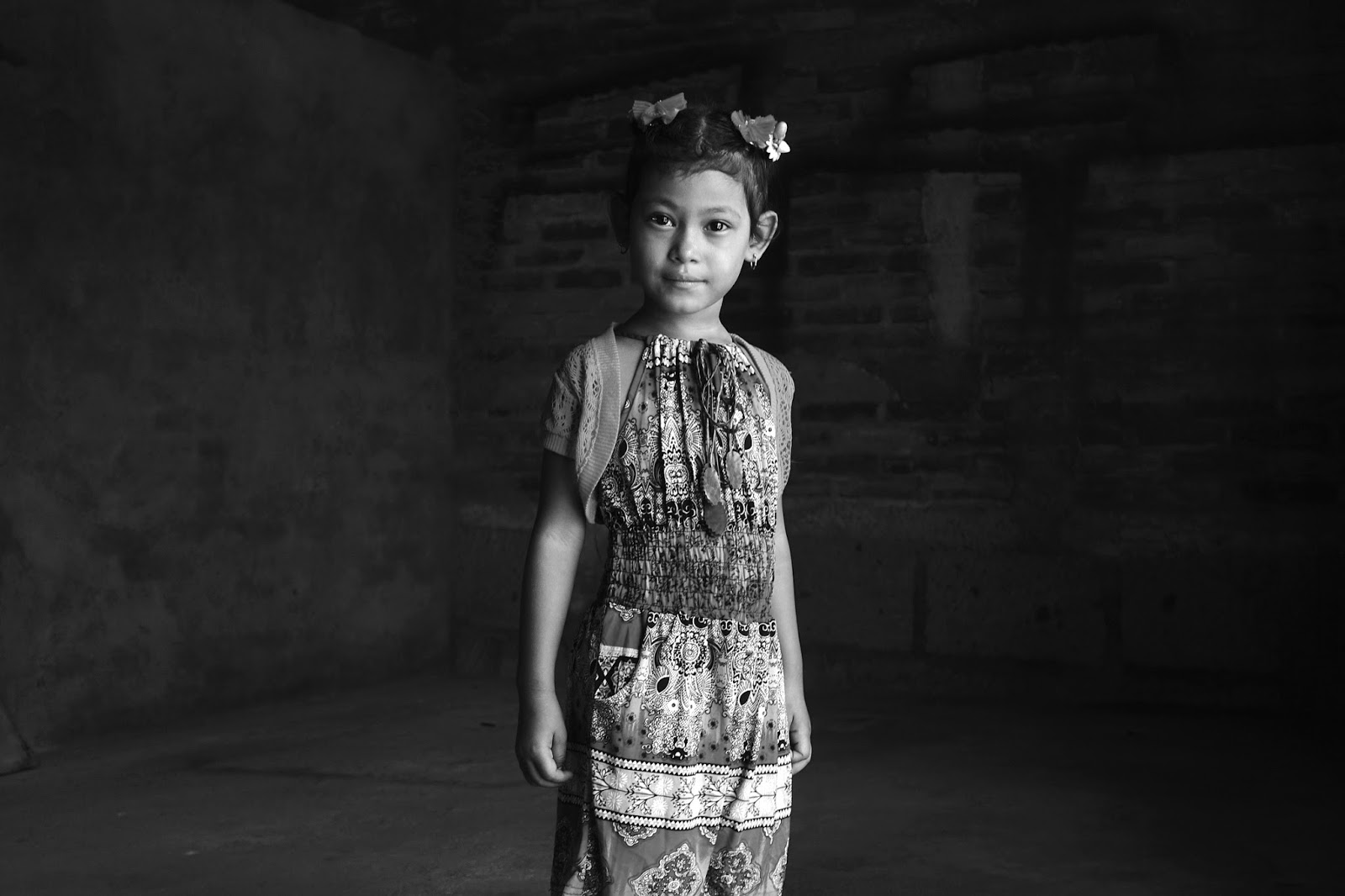
Young Girl + Room, Miramar, Nicaragua, 2017


The people of Nicaragua are as gentle and kind as any in my work over the last two decades. In every single village they embraced us like family and allowed us to document their lives without hesitation. Sure there were a few along the way with more than their share of questions, yet the questions always came with respect and genuine concern.

This young girl lives in a village next to my cousin Victor's home, and those within her village have the deepest respect for our family for their parents had worked with our parents. Here we were, the children of the previous generation getting to know each other over four decades since those memorable days.

Her portrait was made in her neighbor's house, as we were allowed to use this room for portraits. The young children came dressed for the occasion and we did our best to honor their trust. We made both film and digital images until the sun set, and returned just the day before yesterday with photographs for all.

The feeling of connecting with the children of Nicaragua is hard to explain, and my hope is that the film to be developed over the next four weeks will display the emotions more effectively than words can.


Website


Note: This image was made with a Sony RX100M3.

Monday, November 13, 2017

My Father + Family, Managua, Nicaragua


The excitement is building as plans come together for Nicaragua. Thanks to dear Lilliam, we have this portrait of my father and uncle. The looks on their faces are priceless to me, showing a clear confidence and joy in the lives that they had built for themselves with their own hands. The search for remnants of that past will begin in three weeks!

Sunday, December 30, 2012

Young Girl, Corn, Konso Tribe, Lower Omo Valley, Ethiopia, February, 2010

She sat down on a small stool provided to us by the community. Perhaps over sixty people were standing less than four meters to her right, and twenty or so to her left. Their shadows would sometimes enter the frame, giving us pause until we could reorganize the scene once again.

Chaos it was since this was one of our first villages together, and the sound was almost deafening. The fact that the spoken language was unusable to me anyway made the situation more workable. In order to help the children feel comfortable and at ease, hand gestures would be used along with a smile. Running around to organize the scene like a fool helped a bit also, even though organization was the last effect of my actions.

In the end we made wonderful portraits in an open space, a place to which the community took us when asked about such an area. In this village the spaces are so tight that one needs to be careful about walking into sharp, hard and seemingly chaotic branches that make up the houses and fences. All of the children were running past me so quickly while I walked at a snail's pace to make sure my eyes remain intact. It was incredible, the energy.

The space was beautiful, open to the rising sun and with trees all around. The community shared with us a stool on which the people would sit for their portraits. One by one they came, some voluntarily and some at my request, some more shy than others.

She was sweet, and thought that we'd want to make a portrait of her without the goods that she was carrying. To her surprise we wanted both and this made her smile the entire time. Environmental portraits are usually outside of my work, but had been included more so in the past. I am now returning to this approach and will do more of these portraits in the near future.

When every person was finished with the portrait, I walked over to them to help them up and to also shake their hands. In this way their skin touched my skin, and when I do so in India or in Cuba that energy will be transferred to yet another developing experience. When I tell the children this in almost every single case they smile.

According to Wikipedia:

The Konso mainly reside in Ethiopia's Southern Nations, Nationalities, and People's Region, south of Lake Chamo in the Sagan River bend.
Although there are today marked differences in customs between the Konso and their Oromo neighbors, Konso society has also retained some commonalities with traditional Oromo culture. The latter include the gadaa generation-grading system of social organization, similar high priests and a cult of phallicism.
Konso society is largely agricultural and involves the irrigation and terracing of mountain slopes. Staple crops include sorghum and corn, with cash crops including cotton and coffee. Cattle, sheep, and goats are raised for food and milk.
Polygyny is an accepted practice among the Konso.
Group members also erect carvings (wagas), which are created in memory of a dead man who has killed an enemy or animal. The statues are often arranged in groups, with statues representing the man, his wives, and his adversaries present.
In terms of creed, the Konso practice a traditional religion centered on the worship of Waaq/Wakh. In the related Oromo culture, Waaq denotes the single god of the early pre-Abrahamic, montheistic faith believed to have been adhered to by Cushitic groups.

halim.ina@gmail.com
Halim Ina Photography

Thursday, October 25, 2012

Michel, Metalsmith, Family, Bekaa Valley, Zahle, Lebanon

He has since passed on, but this portrait is etched into my mind. In the early years of my work, my Mother's hometown was the starting point. Visiting the family seemed like a good excuse to take along a camera and head into the streets while they were either working or sleeping.

Language was never a barrier, and people knew my family well. Safety was nothing to be concerned with, and walking in the streets was as natural as I had remembered from childhood. Everywhere I turned someone greeted me with a smile, acknowledged our common thread as Lebanese. Most were curious and conversations would begin very easily.

In this instance this man was working in his shop as a metalsmith. I asked him for his portrait and he offered his time happily. We talked for a few minutes then set up the camera to make the image above. In the middle of setting up he asked about my connection to Zahle. I responded with my Mother's maiden name and, as it turned out, he happened to be related to my Mother as a close cousin. He asked about my family, and then asked if perhaps he should change to more proper clothing for his portrait. I assured him that my Mother would love him as he was, and respect him even more so for allowing her son to make his portrait without doing so.

We worked for a little bit, talked more so and promised to see each other the following year. I returned home to tell my family that I had photographed Michel, and noted the smiles on their faces. They were used to me photographing migrant workers, unknown faces, and were in disbelief that my work now included our family. My Mother however knew my work and was sincerely pleased that I had finally included my own family alongside the endless stream of strangers.

I visited Michel every time we returned to Lebanon over the years, sometimes just passing by his shop and seeing him hard at work. Then one year I heard the news of his passing, that a car had struck him while walking down the narrow street of his shop. I was upset because I have seen firsthand how careless drivers can be on these streets, and knew that he had so much more to give. I admired then and admire even more so now his work ethic, how he cared about his job whether he was working for a prominent farmer or a migrant worker, taking care of their respective tools.

One year I returned with his framed portrait to give to his wife. My Mother gave me directions to his home and I decided to go alone. I knocked on the door and a young African answered the door. After exchanging greetings I asked for Michel's wife. She returned a minute or so later and looked at me in a curious manner. I took the framed photograph and placed it in her hands, the entire time looking at both of their faces. This was the first time that they had seen the image and were so surprised that Michel had  been photographed.

The look on their faces was sufficient in itself, and we separated without saying much more. This experience showed me that people do cherish the visual record, and even more so the fact that one took the time to return their loved ones to them. This I do with honor, and pleasure.

Halim Ina Photography

Tuesday, May 22, 2012

The Last View of Home, Île de Gorée, Off the Coast of Dakar, Senegal, February, 2006

Perhaps this stone has been in this place for ten years, perhaps for two hundred years.

One thing is for certain, this is the view that countless Africans shared as they were removed from their continent and enslaved for future generations to come. On this small island near the city of Dakar they were held, on this small island their lives changed forever.

According to an entry in Wikipedia:

'Probably no more than a few hundred slaves per year departed from here for transportation to the Americas. They were more often transported as incidental passengers on ships carrying other cargoes rather than as the chief cargo on slave ships. After the decline of the slave trade from Senegal in the 1770s and 1780s, the town became an important port for the shipment of peanuts, peanut oil, gum arabic, ivory, and other products of the "legitimate" trade.'

Does the number lessen the horror?

While sitting on this beach making this image, visions of Africans shackled in ships and held standing for sale passed through my mind like a slideshow. One cannot imagine the horrors that must have passed through the minds of the people on this island hundreds of years ago, so close to the African continent yet destined to live in a land devoid of their people, their history, their culture and their language.

They were removed from their continent as Africans and forced onto another as slaves. 

Can one imagine such an experience? How does a language disappear? How is a culture snuffed out? How is a history lost?

The first few generations might have thought, we will never forget. How can we ever forget?

As decades turned into centuries, I imagine that these questions must have dissolved as well.

I can never come close to understand a single millisecond of the above, but can appreciate the view above, a view of the unknown.

For more of my work, and to contribute your thoughts regarding this project, please visit the newly designed website below, courtesy of Patrick Luu.

Halim Ina Photography