Showing posts with label Inhumanity. Show all posts

Monday, June 9, 2014

Refugee + Camp, Muzaffarnagar, Uttar Pradesh, India, December of 2013


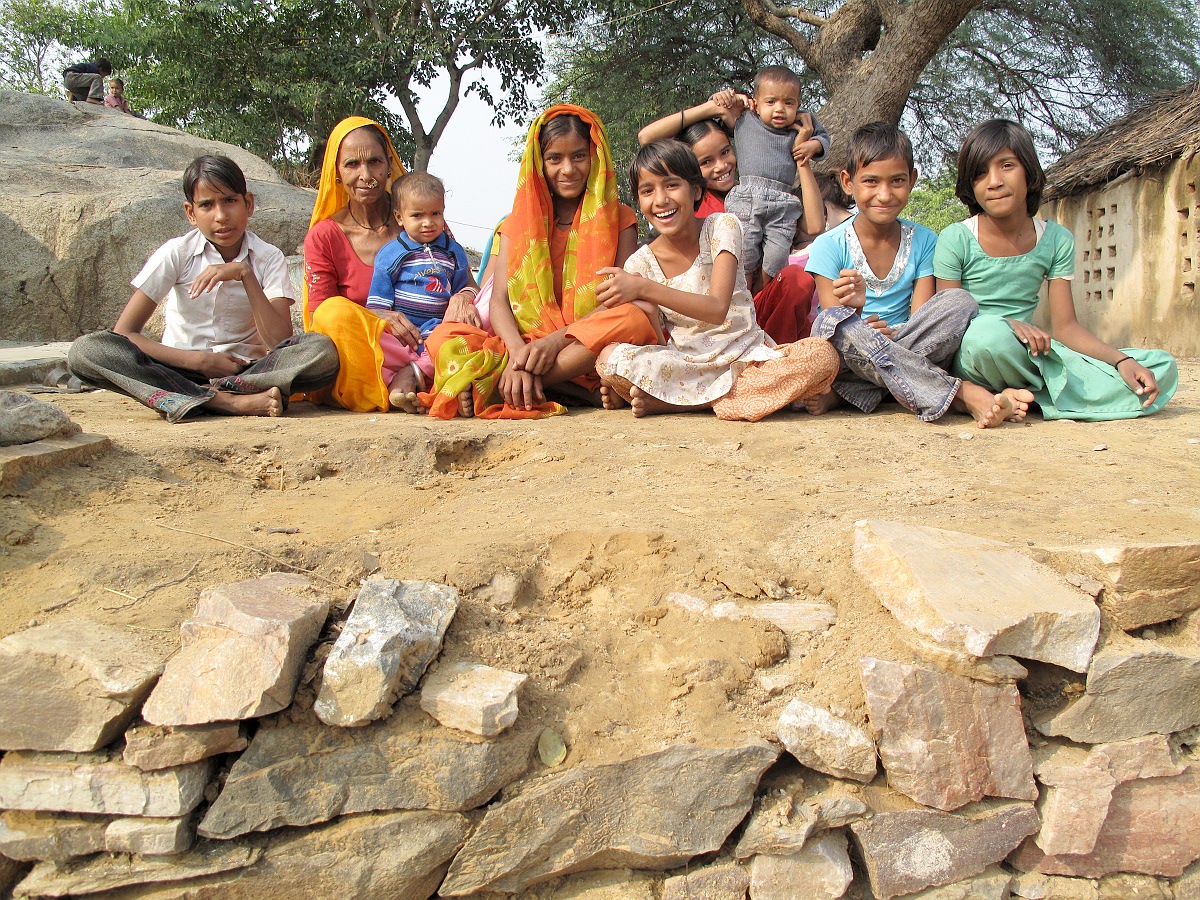
One of the camps we visited at the end of last year, here shown from a distance. The boys were photographed in the back of the camp against the tall, natural background. The people living here were victims of the most recent sectarian violence in Uttar Pradesh, India. Over 100,000 people were living in these conditions, spread among 25 camps. They live without electricity, without lights and without a water supply. The camps are located in the middle of nowhere, without access to education, medicine nor governmental assistance. As a matter of face, we were the first to visit the camps with the aim to document visually the conditions at the time.

www.halimina.org

Tuesday, November 19, 2013

Girl + Student, Nirvanavan Foundation, Village near Alwar, Rajasthan, November 16, 2013

She walks miles to this classroom every day along with children from the surrounding villages. Lines of children walk with determination and need very little external motivation. They sit most attentively for their lessons, and the level of respect shown to their teachers is palpable even from a distance.

Two days were spent photographing the students at Advaita Garden, the main school of Nirvanavan Foundation. Over 250 students from five villages attend this exquisite school and benefit from a most dedicated group of people. On any day one can find artists from around the world visiting the premises and sharing their vision with the students for example. 


The students drawings hang all around her in this classroom alone, while livestock is kept on the premise to supply the children with milk and the guests with Indian style tea. A wonderful cook attends to the kitchen and others take on tasks such as planting trees, carrying for the livestock and the transportation of the many guests visiting the site.

I have visited this space since 2007 and have been deeply impressed with the progress made each year. I look forward to this year's work with them, and to the images resulting from our collaboration. The hope is that the images will raise awareness and funding for three hostels planned for 2014.

halim.ina@gmail.com
Halim Ina Photography

Thursday, December 20, 2012

Girl and Bench, Nirvanavan Foundation, Near Alwar, Rajasthan, India, November 1, 2009

We had just finished photographing in direct sunlight and decided to produce a session in the shade.  The village allowed us to walk around as we desired. We went from home to home looking for a perfect spot, and found the one above.

The sun was high above us, but a little behind the roof of this small room. A narrow path ran left to right of this space, with a natural fence marking the boundary behind us. One person, sometimes two, held a reflector behind me and to the right. The children took turns sitting on the ledge for a few exposures, then jumped down.

I photographed this young girl earlier in the sun, a dozen or so meters away from this spot. She was magnificent and stood strong in spite of the strong sunlight. When we finished and began walking around looking for a spot, to my extreme delight she followed us. As people talked I continued to look for her and she never disappointed me, always walking closely with the most curious, serene eyes.

She never spoke a word, never made a sound. When asked to sit for her portrait she did so with a most delicate grace. To describe my happiness when such a precious spirit allows me to document her is nearly impossible. I am always speechless when the answer is 'yes,' and always grateful. Perhaps this can be attributed to my present surroundings when such a portrait of a child by a stranger is almost impossible; perhaps it's the idea of my lens being the conduit through which she expresses her thoughts to a larger audience.

Regardless, I am speechless each time I am allowed to photograph such a girl. This reaction never ceases to be solicited under such circumstances, even after so many years and thousands of people. I made this portrait over four years ago and still remember it as if it happened yesterday. I remember the scene, the people, the house and the courtyard to the right with the pile of grass stacked high.

The good people of Nirvanavan Foundation are doing incredible work in this and other villages in the area. They have produced a school of exquisite quality and have enrolled hundreds of children from the surrounding villages in their program. They are a selfless bunch, and continue to inspire me.

To learn more about this beautiful foundation and its good works, you may follow the website listed below as well as my own website, which has a gallery dedicated to it.

halim.ina@gmail.com
Halim Ina Photography
Nirvanavan Foundation

Thursday, November 1, 2012

An Afternoon of Medical Care, Chota Village, Rajasthan, India, November 14, 2009

The children huddle close to each other as they watch the good people of Humana People to People dispense medical knowledge and medicine. This is the courtyard of the foundation school, and the man supporting the small child oversees the schools in the area.

During her visits to this and other villages, the medical volunteer meets with women to discuss various medical issues ranging from prenatal care to diet and nutrition. Without her presence the women and girls of these villages would otherwise lack the most basic of medical information and care.

All of the women in this single image have been photographed by me on several occasions spanning four years. I have had the privilege to work with them in the past and hope to support the reopening of their school starting in 2013. On many occasions I have eaten in this home and tea has been served to me during every single visit.

The white wall behind them is the white wall used in my photography to achieve the white background so many people wonder about upon seeing the portraits. Having the girls stand two meters away from it allows the subtle discolorations to disappear. These girls never cease to amaze me, their curiosity is unlike any other and one can see this in the image above.

I love this about them, their lust for life and their desire to learn. This point alone drives me to move forward with the search for funding and to sit down at the end of a long day to type out these words. Should you or your friends have any interest in becoming a party to this important endeavor, you may feel free to contact me through the information below.

halim.ina@gmail.com
Halim Ina Photography

Friday, October 26, 2012

Student, Smile, Humana People to People India, Rajasthan, India, November, 2009

The young girl above lives in Banganga, Rajasthan and was a student of a Humana People to People Girls Bridge School in her village. She has been photographed by me on at least four occasions, alongside her friends and neighbors.

In our efforts to reopen her school, we have found friendly ears within Humana People to People India. The good people of this organization have listened and have let me present thoughts regarding the schools. They have gracefully accepted the idea and offered help on their side in order to make schools a reality once again for her and others like her.

Just this week a young woman named Ann Averbach reached out to me with a wonderful idea. She and her team are opening a second yoga studio in Santa Barbara and have offered their space as an educational center, as a gallery and as a source of possible financial support for my work; and these five schools are an integral part of my work presently.

The name of her efforts is DiviniTree Yoga and she hopes to open the doors to the space starting the first week of 2013. Should you live in the area, or perhaps have an interest in this collaboration, then you may feel free to contact me through the information listed below. My website has been redesigned by the original designer, Patrick Luu, and contains links to the various foundations from my past photographic work as well as my present ventures in Africa, Asia and the Americas.

Next month we will collaborate in documenting Ann's team of instructors, and hope to produce images worthy of this collaboration. We will then produce a show in her space which reflects this collaboration, images from next month mixed with images from Africa and Asia, as well as the Americas.


I certainly look forward to my California visit next month, and to a lifetime collaboration with Ann. On behalf of the young girl above I share my gratitude for being allowed this opportunity.

halim.ina@gmail.com
Halim Ina Photography

Saturday, April 14, 2012

Girls, Students, Humana People to People India, Early in the Morning, November 17, 2009

In the previous post a story is shared regarding an elderly man from this village. The remote location of this village coupled with a certain attitude towards the education of girls in this area has made it quite difficult for the girls to attend school in the past. With the elderly man's permission and understanding these girls have had the experience of a school inside of their own village through the good efforts of Humana People to People India.

Since this image was made the school was forced to close due to a lack of funding. Humana People to People is doing wonderful work in this village as well as in dozens of villages across the countryside in Rajasthan, India. Their work has expanded to various other regions of India and encompasses solar energy projects, micro loan initiatives, farming clubs and so forth. Education is one aspect of their approach, especially the education of girls traditionally held back from going to school.

So we find ourselves once again searching for ways to fund this school and nine others like it. These girls are like girls from all over the world. They giggle for the same reasons, they laugh in the same pitch and long for a chance to become educated. Like economists all over the world, they understand the importance of this most immediate need and will pass on their education to their daughters and sons.

Just before this image we worked for perhaps two hours making portraits of each and every single girl enrolled in the school. They met me in the morning before the sun came up, shivering in the coolness of the morning. The clothes in which they are dressed at this moment are different than the clothes they chose to be photographed in earlier. They know my preference for simpler and darker clothes and blessed me with this single wish. They know my aesthetic limitations and forgive me for such.

I adore these young girls, as I adore spirits persevering when circumstances are most difficult. We will find support for their school quite soon. These are the smiles that await me later this year, perhaps early next year, when I visit them while attending class in their village.

For more of my work, please visit the newly designed website below, courtesy of Patrick Luu.

Halim Ina Photography

Friday, October 28, 2011

Mentally and Physically Challenged, Chamacanga, Western Kenya, 2007


Her home is a small group of buildings resembling a school campus in Western Kenya. She lives with perhaps two dozen children and the caretakers of the facility, religious figures as well as laypeople.

All of the children are inflicted by either physical or mental challenges, often times a combination of both. The people of this wonderful home have taken it upon themselves to speak to the communities around them, gaining access to these vulnerable children. In many instances, the families of these beautiful children keep them from public view, afraid of the social stigma associated with having such children. The caretakers shared stories with me that made me reflect deeply on the human family, and wonder quite a bit about our innate goodness.

In the middle of rural Kenya and with very little other than the buildings in which the children are housed, good people tend to daily chores associated with a most difficult situation. Without access to medical personnel or basic supplies or luxuries such as the internet, they do their best. All of the children have uniforms, and rooms in which to sleep. It feels like a large family, with many of the children treating each other like sisters and brothers.

On a sunny day we make portraits of the entire population within the campus, including all of the children. In a few instances the good staff help children stand still for their portraits, and in a few other instances a wheelchair is provided for support. Some of the children laugh uncontrollably with the joy of the moment, while some take this opportunity to share with me a snapshot of unimaginable difficulty.

From this day forward, I take it upon myself to locate such a school in each country visited by me, and to tell such stories. This is the least one can do, while aspiring to do much more.

As Father Felix of the school tells me in an interview:

'What it means to me having children of this type is that I will look at them as Gods' creatures who need all of the assistance possible to live the life god meant them to live as human beings when he crated them, so that's why we struggle hard to make sure that they are helped positively, physically, mentally and even spiritually... like on Sundays they attend mass, those who can listen they listen a bit and they are just there with the hope that God blesses them as they come because our intention towards them is something very positive.'

halim.ina@gmail.com
Halim Ina Photography

Wednesday, May 18, 2011

Widow, Glasses, Mosque Courtyard, Zakat Foundation of India, Old Delhi, India, 2008


What has she done other than lose her husband?

She wakes up one day without a spouse and finds herself without the support of the rest of her family. Her family has thrown her out, views her as a burden and at times a bad fortune. She wanders the streets asking perfect strangers for help when her own family is unwilling to offer the same.

One foundation is doing more for her than her own family. She receives a month's supply of goods from Zakat Foundation of India, due to the generosity of individuals according to their Muslim faith. The foundation helps the donors estimate their giving, enabling them to both adhere to their beliefs and to help someone else in need.

The effect of their giving is immediately felt on the other side of town, where a group of women are gathered today near the local mosque, next door to a medical clinic also run by the foundation that provides medical care to the indigent, to the homeless and to those without a single thread of support from Society.

On the street level, good work is being done daily by good people and out of the spotlight. The doctor of the clinic is barely noticed as nurses go about their routine, as patients walk in and out of the pharmacy. Here babies are delivered with care and love, and pride exists on the faces of the parents like under any other healthy environment.

Making portraits under these circumstances brings limitless value to my work, to my life.

You may learn more about this wonderful foundation by clicking below.

Zakat Foundation of India

halim.ina@gmail.com
Halim Ina Photography

Saturday, May 14, 2011

Widow, Courtyard of Mosque, Zakat Foundation of India, Old Delhi, India, November, 2008


Like the previous images of widows in my blog, the courtyard of a mosque is the scene for this portrait. The courtyard is open to the sky and for an hour or so allows direct light at a low angle against a white wall.

The wall is next to an area of washing hands and feet, where men gather to do so before prayers. So men are doing such constantly while we are making portraits. This is incredible due to the fact that we are photographing covered women in a mosque, with their acceptance and permission.

Over 40,000,000 women in India are widows, countless of them experience hardships like the woman above. For many, the remaining years are lived in anticipation of death to free them from this life of isolation. On becoming a widow, many women are viewed as burdens on the remaining family. While a tradition of burning widows has been outlawed, their remaining life is referred to as a living version of such.

Upon the death of a partner, women are traditionally forbidden to remarry while men are free to do so. In light of the reality that many women marry when young, this means that many will be handed a life of destitute loneliness for a long portion of their remaining life.

The woman above receives support from Zakat Foundation of India, and the good people that give of their earnings in accordance to their Muslim beliefs.

Friday, April 22, 2011

Girls, Students, MADODEF, Western Kenya, 2007


Going back in time is as easy as pulling a picture out of the box. It feels remarkably in the moment.

The image above is but a few minutes ago. These three girls have perhaps finished their education in this rural school, maybe they have gone onto higher education with the help of the foundation. For the time being, they are three friends choosing to make this portrait together.

When we arrive on this overcast day, the students are surprised to see us. They choose small groups for the session when asked, and do so effortlessly. The school is to their right, their friends are standing to their left. Every few minutes it rains a little bit. We continue on, my camera covered with a hat and the girls ignoring the droplets altogether.

The foundation, MACODEF, supports more than a few students in this rural school. The main reason for the foundation's involvement in the lives of these students is the fact that HIV/AIDS has turned many of the area's children into orphans. Driving through the small towns produces images of small coffins lined up at storefronts for sale, along with their larger counterparts.

It is a stark reminder that while much of the West has almost forgotten about this virus, certain parts of the world are faced with its endless menace, with its lack of mercy for the living. Let us hope for the sake of the girls above that the present is different.

Wednesday, March 16, 2011

Mentally & Physically Challenged Orphan, MACODEF, Western Kenya, February, 2007


The people tell me that this is his only shirt, as is the case with the two dozen or so children in this small orphanage. We arrive early this morning before the children wake, many of them sleeping almost naked in their simple beds.

The simple building is located on the outskirts of a government school where the other children from the area attend classes. The orphans in this small building however will never attend classes on even this simple campus. For them to even receive the minimum care in the orphanage, their families needed to be convinced.

The reality is that before the orphanage these children were hidden from Society, some locked in rooms while others chained and restrained. There is a stigma involved with their physical and mental condition, as perhaps in many other parts of the world. In their present home, they sleep peacefully and are attended to by kind and gentle spirits.

Another fact is shared with me by the people in the orphanage: many of these children are anything but orphans. They do have families but their families have chosen to place them in the orphanage for various reasons, ranging from shame to inability to maintain proper care.

So we arrive this morning and see the children get ready for their photographic session with speed and excitement. The sight of children moving quickly in the shadows of the building gives me an immense sense of honor, of humility. Here are children facing daily hardships that most in the world will never glimpse. Yet they get up this morning and give of themselves without asking for anything in return.

The children from the neighboring school gather on the fence and watch with genuine curiosity. Like the children in the orphanage, they face an extreme life regardless of their mental and physical abilities. They stand in silence and lend their support to their brothers and sisters being photographed, until they are called in by their headmaster.

We photograph for perhaps one hour, against the back wall of the building. The caretakers handle the children with gentle hands, guide them to the camera and allow the children to make their own expressions, to claim their own identity. The young man in the portraits above does just that, without guidance from anyone. He stands his ground and tells his story.

One may view more regarding the foundation doing good works on behalf of the children below.

MACODEF

Sunday, February 27, 2011

Banjara Girl, Rajasthan, India, November 25, 2008, Roll 2, Exposure 6


As the title describes, the image above represents the sixth exposure from the second roll of film on Thanksgiving Day in Rajasthan, India. This young girl belongs to the Banjara Community and attends a school for working children sponsored by Humana People to People India.

During the day, she works collecting plastic, fabric, metal and so forth for a middle person to come by and purchase. Then for perhaps three hours, she attends classes in a humble building and acquires the most rudimentary reading and writing skills. Her parents have certainly been informed and have given their permission for her education, as long as she is still able to work during the day.

Today, Humana People to People India faces serious funding challenges along with the usual social and political turbulence. Through these images my hope is that we can help the foundation help the people. Should you find it within yourself to recognize an opportunity to aid in this venture, you may feel quite free to contact me through this medium.

Perhaps a sister school can be found locally, perhaps a bake sale or even perhaps a purchase of this print. Regardless your initiative will be most appreciated by this and every single child under the Humana umbrella.

Tuesday, April 6, 2010

Young Student, Humana People to People, Rajasthan, India, November 17, 2009


The notes on this roll of film tell me that this is the second exposure on roll number 18. This time around, instead of working only under the beautiful sun, we decide to take advantage of the less popular times of the day. In this way, we are able to visit all of the schools. We arrive at this village in the middle of the day with the sun above us. We find a wall with some shade, have the girls sit to our right and ask for a small stool. Two 'volunteers' stand behind me with a reflector. 

The girl in this portrait attends a Humana school, one that is designed to provide a bridge between illiteracy and a government education. Perhaps thirty girls in each village are provided an opportunity to learn for three years, at which point the idea is for them to join the mainstream educational system. The State of Rajasthan, while seeing a tremendous increase in female literacy, is still perhaps 20% lower than the international average according to many estimates. With respect to female literacy, the case for improvement is even greater, often seeing girls at a 15% disadvantage. At the end of colonial rule, the State of Rajasthan had the lowest literacy rate among Indian States, with a rate near 18%. 

While the British tripled literacy rates during their rule of this nation, when India won its independence, its literacy rate was little more than 12%. In sixty years, this state has more than tripled its literacy rate. In contrast, the State of Kerala, at times termed socialist, has the highest literacy rate, with one district named Ernakulum reaching a perfect literacy rate for the first time in India. The above is written to highlight a few variables that seem to correlate well in many studies with the level of education achieved. 

In comparison to the less literate States, life expectancy for females in the State of Kerala is ten years greater than for those living in the States with the lowest literacy rates. In addition, the State of Kerala has an infant mortality rate of 1o per 1,000 in comparision to over 60 per 1,000 in the least literate State of Bihar. Furthermore, the birth rate per 1,ooo people in Kerala is about 17, while the birth rate per 1,000 in the least literate States nears 30. According to many sources including Wikepedia, over one third of the world's illiterate population is Indian. According to these same sources, based on population growth patterns and historical advances in literacy, the majority of the world's illiterates may call India their home in less than 10 years. While many might look down on nations like China and Iran and Burma, one point that is rarely spoken is that these three nations have youth literacy rates that are 10% to 15% higher than the same in India; all three have rates above 95%. 

As a side note, a nation like Cuba has a youth literacy rate of 99.8% in comparison to a rate of 96.6% in the United States as of 2004 according to estimates. Even more dramatic is the same comparison in 1980, with Cuba boasting a rate of 98.3% and the United States standing by its system of producing a rate of 91.9%. While these numbers may shed uneven light on these regions, they have given me immense insight into the needs of these parts of the world, often times correlating in an accurate manner with my experiences. This young student smiles, even laughs out loud; she is learning, she is joining children like her from around the world to end the cycle of illiteracy.